
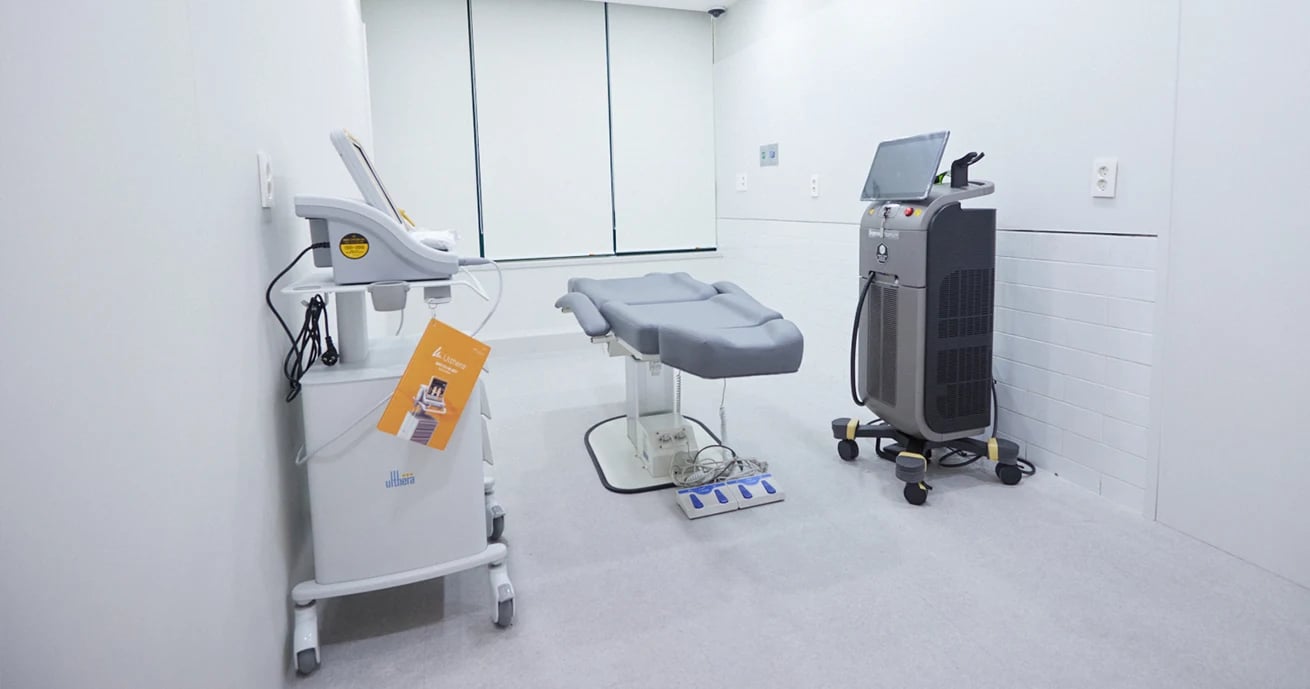
Three ways of lifting that do not do the same thing
The word lifting covers procedures that work by different mechanisms, and the differences matter more than the shared name. Thread lifting places absorbable sutures under the skin to reposition tissue mechanically and, as the threads break down, to stimulate some collagen where they sat. Ultrasound-based devices deliver focused heat to a chosen depth, including the deeper supporting layer, without breaking the surface. Radiofrequency devices heat the dermis more broadly, with cooling to protect the surface, and rely on the tissue's response to that heat.
One moves tissue directly and shows an immediate change. The other two do not move anything on the day; they create a controlled injury that the tissue responds to over weeks and months. Choosing between them starts with what is actually loose, how deep it is, and how much change is realistic without surgery.
What each approach can and cannot do
Thread lifting can produce a visible repositioning immediately, which is why the clinic's material lists effects at the time of treatment. What it cannot do is remove excess skin or hold heavy tissue indefinitely; the threads are absorbable and the duration listed on the clinic's pages is a range, with individual variation noted. Ultrasound treatment reaches the deeper layer and is often considered for early to moderate laxity along the jaw and lower face, but the result develops gradually and is subtler than a surgical lift. Radiofrequency tends to be discussed for skin texture and tightening across broader areas rather than for repositioning a specific fold.
None of these replaces a surgical facelift for significant laxity, and none of them adds volume where the underlying problem is loss of fullness rather than descent. Clair Plastic Surgery (클레어성형외과), Gangnam offers thread, ultrasound and radiofrequency options, and the reason to offer several is that they answer different questions. Which question applies to your face is determined by examination.
The risks that belong to each
Mechanical methods and thermal methods carry different risks, and it is worth knowing which belong to which. Thread lifting can cause swelling, bruising, tenderness and a pulling sensation in the first days, and less commonly dimpling or visible irregularity where a thread sits, asymmetry, thread migration or extrusion, and infection. Energy-based treatments can cause redness, swelling, tenderness and temporary numbness, and less commonly burns, blistering, uneven texture, small areas of fat loss with ultrasound, or nerve irritation that is usually temporary.
The clinic's after-care notes for these procedures describe mild swelling, redness, warmth and aching in the first day or so as expected and self-limiting, with alcohol, smoking, saunas and heavy sweating to be avoided for a period afterwards. Ask what would be outside that expected range and how quickly you should report it.
Why the same device gives different results
Two people can have the same treatment on the same device and see different outcomes. Tissue thickness, skin quality, age, previous procedures and how the body responds to heat all vary. Energy settings, treatment depth and shot count are chosen per person, and a careful setting for one face is not a template for another. This is also why a well-known device name does not promise a particular result, and why asking about the operator's assessment is more useful than asking about the machine.
There is a timing question as well. Because thermal treatments work through a response that develops over months, judging them at two weeks is premature. Because thread lifting shows an immediate change that then softens as swelling resolves and the threads absorb, judging it at two days is also premature. Ask when a fair assessment can be made and plan any follow-up around that.
Questions that make the consultation useful
Before agreeing to any lifting procedure, ask what specifically the clinician sees as loose and at what depth. Ask why this method rather than another, and what would happen if you chose to do nothing for now. Ask what the treatment cannot change, how long the listed duration figures are expected to hold in your case, and what the plan would be if the result were less than hoped. Ask about combining methods only after you understand what each does on its own, since combining also makes it harder to know which one helped.
Suitability, method, energy settings and the expected course are decided at consultation and examination. The descriptions above explain how the approaches differ; they do not tell you which one, if any, is right for you.