
Sculptra
A PLLA-based injectable listed by Clair for collagen stimulation and facial-volume concerns. Changes are discussed over time rather than assessed only immediately after treatment.
- Approach
- Injectable treatment
- Your plan
- Assessed individually
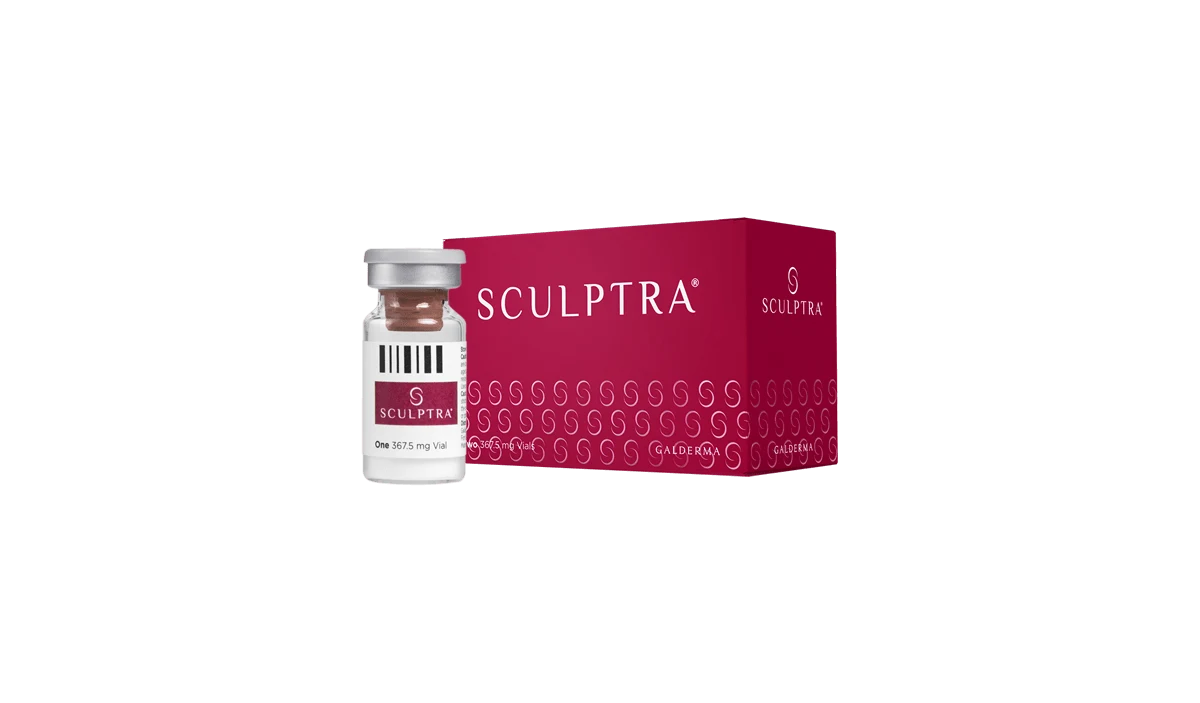
How the approach works.
The official page identifies poly-L-lactic acid as the material. The clinician plans the treatment area and follow-up around the material and your individual tissue condition.
Understanding the anatomy
AI-generated educational illustrations, not patient photographs or treatment results. Simplified and not to scale; they do not show a recommended injection depth or an individual treatment plan.
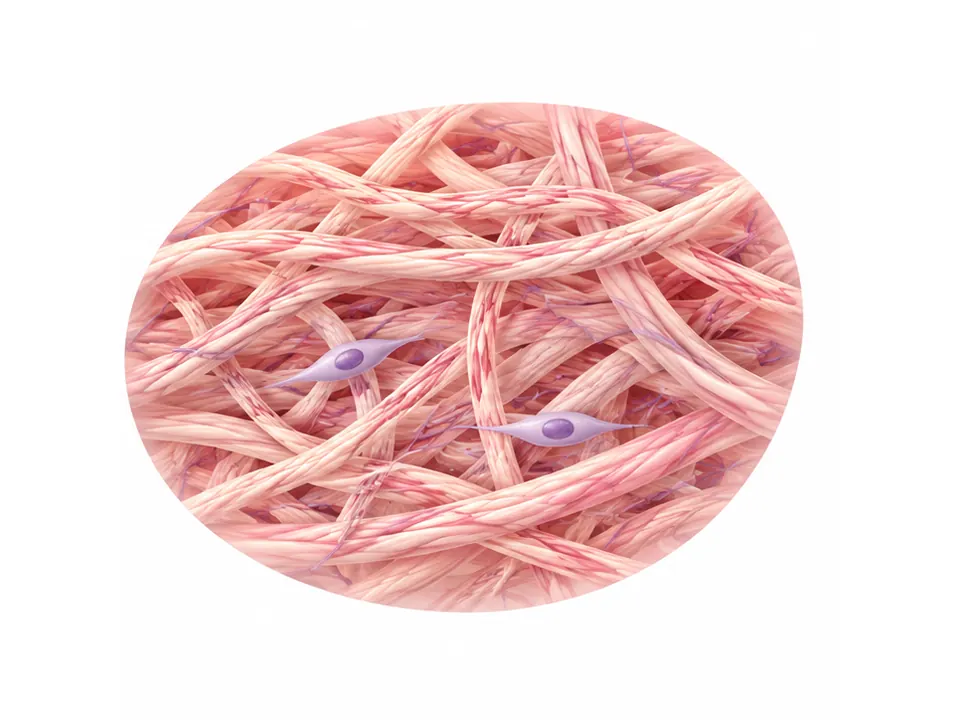
An enlarged schematic view shows collagen bundles and cells within dermal connective tissue.
Initial fullness and later tissue response
These selected illustrations distinguish initial fullness from the later response described for PLLA. They are not patient before-and-after images or a complete treatment timeline.
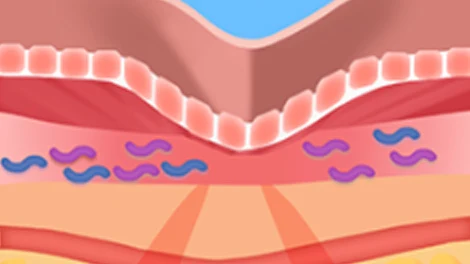
The crease before treatment
The source begins with a crease in a simplified skin section. It provides a starting concept, not a measurement of a patient’s volume loss.
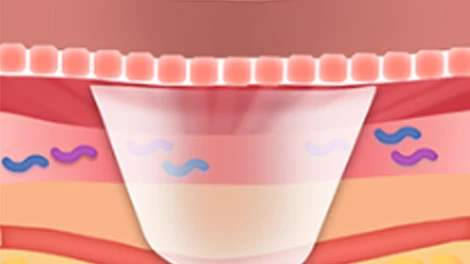
Initial volume includes water
Clair describes the initial injected volume as PLLA plus water. This early fullness should not be treated as the final tissue response.
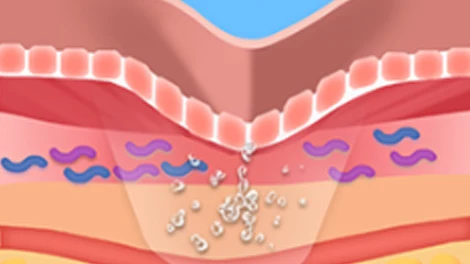
Water absorption after treatment
The source describes water being absorbed in the days after treatment. Follow-up considers these early changes separately from the later response.
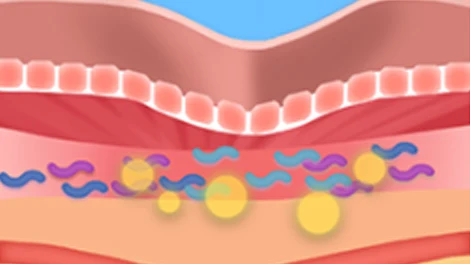
PLLA and the collagen response
Clair describes collagen formation as PLLA breaks down. The individual response and review schedule are discussed at consultation.
Illustrations from Clair’s official website. These simplified drawings are not patient results. The individual technique may differ.
What the consultation considers.
Gradual changes
Volume concerns
Follow-up planning
This is a starting point for a consultation, not an individual treatment recommendation.
Recovery, risks & limits.
Some reactions can be temporary; complications can also require treatment. This is not an exhaustive list.
Bruising, swelling, tenderness, lumps or delayed reactions can occur.
Infection and an unsatisfactory or uneven result may need further care.
Unintended injection into a blood vessel can cause tissue injury and, in facial injections, vision loss or stroke.
Your timeline is individual.
Procedure time, anaesthesia, follow-up and return travel depend on your examination and the final plan. Confirm them before paying for flights or accommodation.
Recovery and results vary. Your clinician should explain the procedure-specific risks and aftercare before you decide.
If you develop severe or worsening symptoms after treatment, seek medical attention rather than waiting for an online reply.

Dr. JinHo Han
Representative surgeon · Plastic surgery specialist
A personal consultation with a plastic surgery specialist. Discuss your facial features, skin condition and treatment preferences before deciding on a plan.
Your questions, answered.
Should I judge the result on the treatment day?
The clinic describes a gradual response. Discuss when a meaningful review should take place and what the initial swelling may mean.
How long should I stay in Korea?
Procedure time, anaesthesia, follow-up and return travel depend on your examination and the final plan. Confirm them before paying for flights or accommodation.
Can I choose the procedure before an examination?
You can explore your options first. The final plan requires an examination, a discussion of alternatives and informed consent. Choosing no treatment is also an option.
How is the cost decided?
The clinic confirms the proposed method, treatment area and product or equipment before giving an individual quote. Ask what is included in follow-up care.
What should I disclose before treatment?
Tell the clinician about previous procedures, implants, medication, allergies and health conditions. Bring available details of earlier injections or surgery.
Sources & further reading
Clair Korean treatment informationPatient safety informationSource review: September 2026